


The Voice Cafe Blog
The Voice Cafe offers one-to-one online training via Zoom as well as an Audio Study Zone, an access based audio learning resource and can be used either on its own, or as a supplement to online one-to-one lessons.
Acting, AI and I – Protect Your Mint Value
Tuesday, August 11, 2026 - 10:53
The 2023 actors’ strike which brought Hollywood and the British acting industry to a halt finally meant that tight regulations on the use of AI came into effect. But how effective have these been? What’s changed and what has stayed the same? 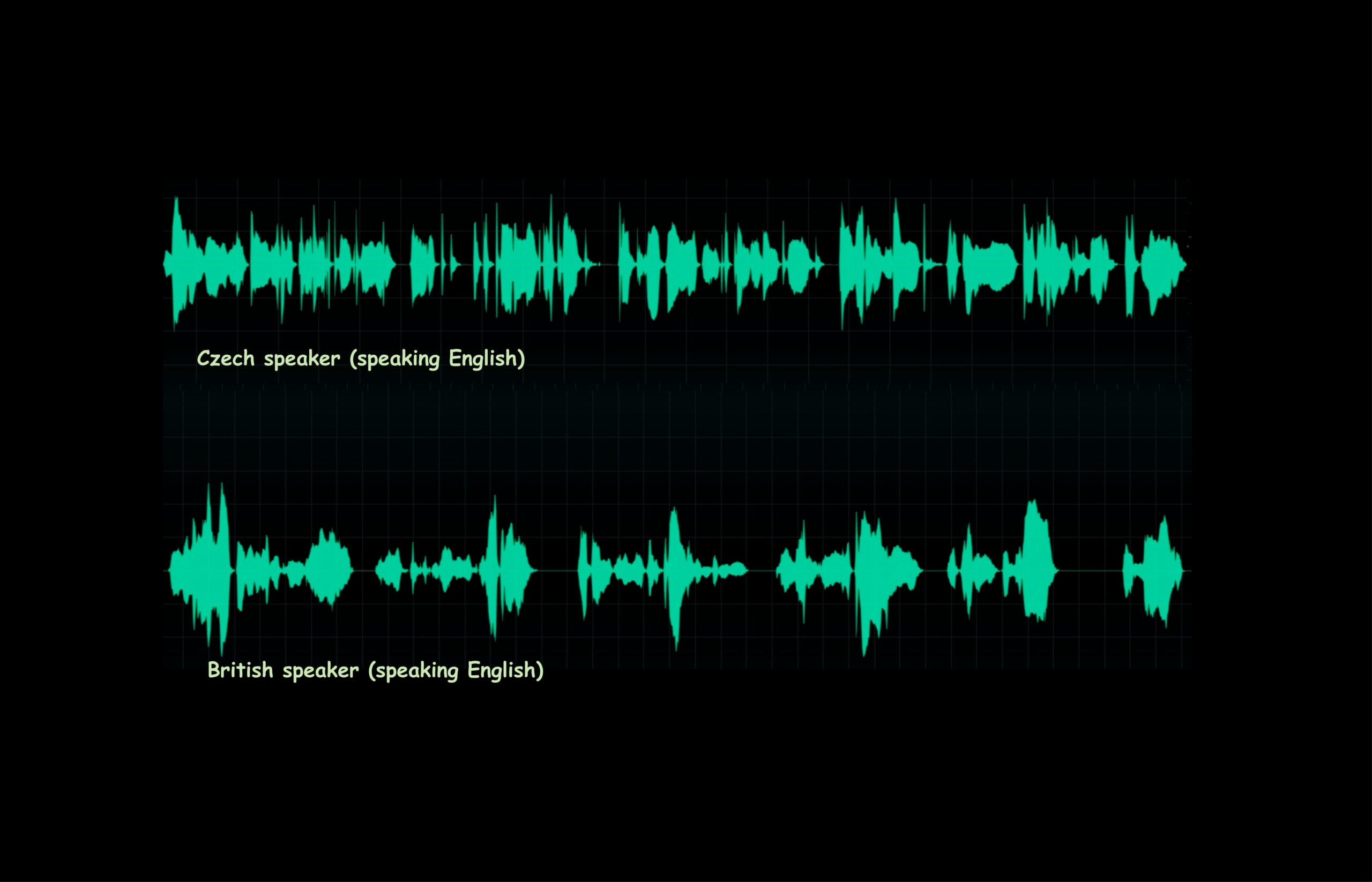
Learning English Intonation as a Non-Native Speaker
Wednesday, April 29, 2026 - 17:45
Speaking from the perspective of a Czech native speaker, learning English intonation is one of the most difficult aspects of an English accent to get right. Unlike learning a consonant, for example, where the requirements on producing the sound are somewhat clearly laid out, easily understandable and more tangible, learning intonation is harder to grasp and takes time to perfect, as it is so much more subtle. 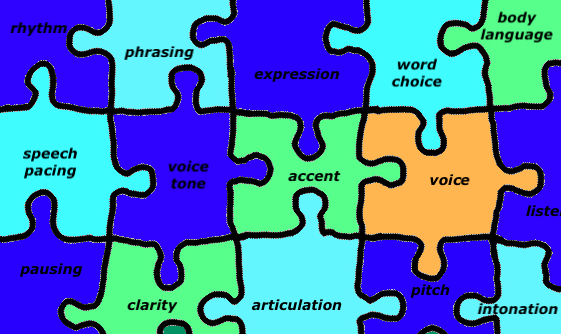
What is Elocution? Under the Big Umbrella.
Monday, November 03, 2025 - 14:14
Elocution simply means ‘to be eloquent’ and to be able to express oneself clearly and expressively with optimum communication for your situation. Many people have a very traditional perception of the term ‘elocution’ 
English Intonation – It’s not what you say, it’s the way that you say it.
Wednesday, July 02, 2025 - 15:50
Intonation is the music of the voice. It tells us much more about the feelings and intentions of the speaker than the words they choose. Intonation can make a boring story sound interesting and an interesting story sound boring. 
Taking a break. Do English accents love or hate HIATUS?
Tuesday, December 17, 2024 - 18:19
English language speakers often avoid a HIATUS by bridging it with a connecting consonant sound. For example, we don’t say ‘a afternoon’ but ‘an afternoon’. We put an ‘n’ there to separate the vowels and link them together via a consonant. But certain accents of English, such as Modern British RP (Received Pronunciation), will go further to avoid any type of HIATUS between vowel sounds. 
Not All Old Habits Die Hard: My Experience of Learning the Modern British RP Accent as a Czech Native Speaker
Friday, February 09, 2024 - 18:01
Learning the modern RP accent has been quite a journey; one that I'd go on again any time. To introduce myself as a learner, I initially spent around 3 years learning Standard BE on my own, during my university studies for teaching English. While I used textbooks explaining general pronunciation rules of, mainly, individual sounds, the recordings I followed were of more traditional RP speakers, whereas my goal was to learn modern RP. 
The Cut Glass Effect – Why is the British RP accent sometimes described as a ‘cut-glass’ accent?
Tuesday, June 06, 2023 - 20:48
‘She has one of those cut-glass accents’ ‘He speaks in a cut-glass accent’ What is a cut glass accent? Why is the British RP Accent (Received Pronunciation) often described as 'cut glass'?. 
Be Present when you Present.
Thursday, January 07, 2021 - 19:05
Worse than …?
Fear of public speaking is widely touted as the number one fear. The first well known survey in 1973 showed three times more people fear public speaking than death. More recent surveys show that between 40% and 60% of people are terrified of, or hate making speeches and presentations, with more women scared of public speaking than men. Even actors often dislike it because they are not in role and so ......... 
Take 2 Stools – How self-tape auditions are changing the face of the casting process
Saturday, June 06, 2020 - 17:59
Take 2 stools, a pile of hard backed books, a table, a cuddly toy, and a big wad of blu tack: what have you got? You guessed: the beginnings of a rather shaky, somewhat lopsided, and rather unconvincing self-tape. 
Parallel Effect – The effect of /r/ in the American Accent
Monday, January 13, 2020 - 21:55
In the general American accent, the retroflex /r/ has such a pronounced effect on the vowels adjacent to it, particularly when in the case of a final ‘rhotic’ /r/ closing a syllable, it dramatically changes their quality. Whatever the preceding vowel, the ‘r-colouring’ effect seems to end up pushing the vowel parallel and close to the top of the hard palate. Literally. 